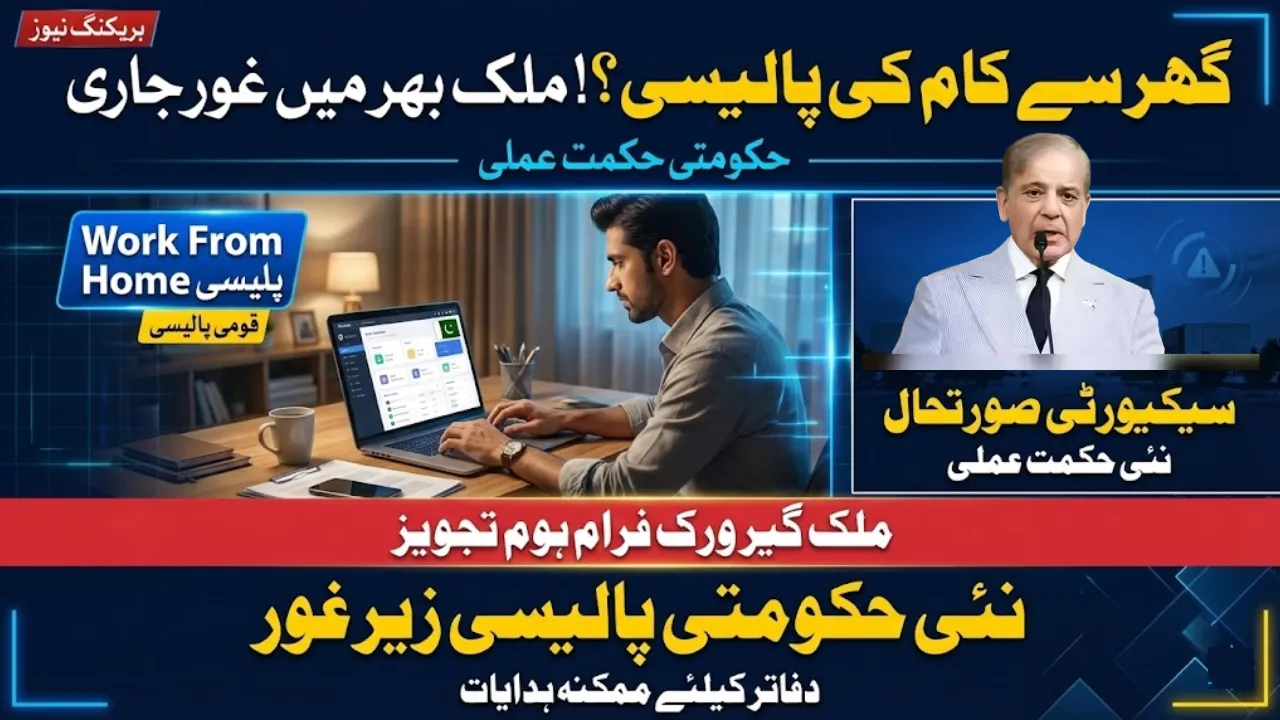
Pakistan’s federal government is reviewing a nationwide work-from-home strategy as regional security tensions begin to affect global fuel transportation and energy markets. Officials say the proposal is part of a broader plan to manage fuel consumption and maintain economic stability if international shipping disruptions continue.
The discussion comes after concerns that rising geopolitical tensions in the Gulf region could temporarily slow down oil shipments used by Pakistan.
حکومتی ڈیٹا بیس سے معلومات کی تصدیق کی جا رہی ہے...
0%
Why the Government Is Discussing Work From Home
Policy makers are exploring remote-work options mainly to reduce fuel usage and transportation pressure. When fewer employees travel daily to offices, it can significantly lower petrol and diesel consumption.
Officials involved in recent policy meetings believe a temporary work-from-home approach could:
-
Reduce fuel demand across major cities
-
Prevent sudden pressure on petrol supply chains

-
Maintain business operations without disruption
-
Improve traffic flow and urban mobility
Experts say similar strategies were successfully used during past crises and also during the COVID-19 pandemic.
Fuel Supply Situation in Pakistan
Government sources indicate that Pakistan currently maintains several weeks of petrol and diesel reserves, meaning there is no immediate shortage. However, authorities are preparing precautionary steps to avoid market panic or hoarding.
| Key Energy Indicators | Current Situation |
|---|---|
| Petrol & Diesel Reserves | Approximately 3–4 weeks available |
| LNG Supply Contracts | Long-term contracts still active |
| Oil Shipping Routes | Facing delays due to regional tensions |
| Government Monitoring | Cabinet committee reviewing supply daily |
The monitoring committee is analyzing petroleum imports, LNG shipments, and logistics routes to ensure the country maintains stable energy supplies.
Possible Nationwide Implementation Plan
If approved, the work-from-home strategy may be introduced gradually. Early discussions suggest the plan could apply to:
-
Federal government offices
-
Selected provincial departments
-
Private sector companies where remote work is possible
-
IT, banking, and service industries
Provincial governments are also expected to participate in the decision-making process so that implementation remains coordinated across the country.
Economic and Business Impact
Economic analysts believe that a temporary remote work policy could help stabilize fuel consumption without slowing economic activity.
Businesses that already operate with digital systems may adapt quickly. However, sectors requiring physical presence—such as manufacturing and logistics—will likely continue normal operations.
The government’s priority is to balance economic productivity with fuel conservation, ensuring businesses remain functional during uncertain global conditions.
Public Advisory From Authorities
Officials have reassured citizens that Pakistan is not facing an immediate fuel crisis. Consumers have been advised to:

-
Avoid panic buying of petrol or diesel
-
Use fuel responsibly
-
Follow official updates from government agencies
Authorities emphasize that careful planning now can prevent supply disruptions later.
What Could Happen Next
The cabinet committee reviewing petroleum supplies is expected to hold additional meetings with provincial officials. Based on these discussions, the government may announce temporary guidelines or a formal work-from-home advisory if the international situation worsens.

For now, officials say the plan is preventive rather than reactive, aimed at protecting the country’s energy stability.
FAQs
Is Pakistan running out of petrol or diesel?
No. Government officials confirm that the country currently has several weeks of fuel reserves and supply chains remain active.
Why is the government considering work from home again?
The proposal aims to reduce fuel consumption and transportation pressure if global oil shipping disruptions continue.
Will all offices shift to remote work?
Not necessarily. The plan would mainly apply to sectors where remote work is possible.
When will the final decision be announced?
Authorities are still reviewing the proposal through a cabinet committee, and further updates are expected after consultations with provincial governments.
Conclusion
Pakistan’s consideration of a nationwide work-from-home strategy highlights how governments prepare for global economic uncertainties. While the country currently has stable fuel reserves, proactive planning could help avoid future disruptions and maintain economic continuity if regional tensions continue affecting energy supply routes.